When a family member is experiencing mental illness, finding the right kind of support — for both the loved one and the family — can be difficult. By the time many families reach Community Alliance’s Family Support and Education program, they are often exhausted, overwhelmed and unsure where to turn next.
“When families finally connect with our program, they are often completely out of resources, financial and emotional, and usually in crisis,” said Jill Davis, LIMHP.
Our Family-to-Family program provides education, support and practical tools to families and individuals affected by mental illness. By offering an option to receive individualized counseling and the opportunity to connect with others dealing with similar challenges, the program fosters hope. The eight-week Family-to-Family course uses the NAMI Family-to-Family curriculum, and participants learn about mental illness, treatment and recovery, communication, problem-solving, crisis planning and self-care.
Just as importantly, they learn something many families need to hear: their loved one’s illness is not their fault. By creating a space where families can build understanding, release guilt and develop new ways of communicating, the program helps make healing possible for everyone involved.
Supporting the whole family
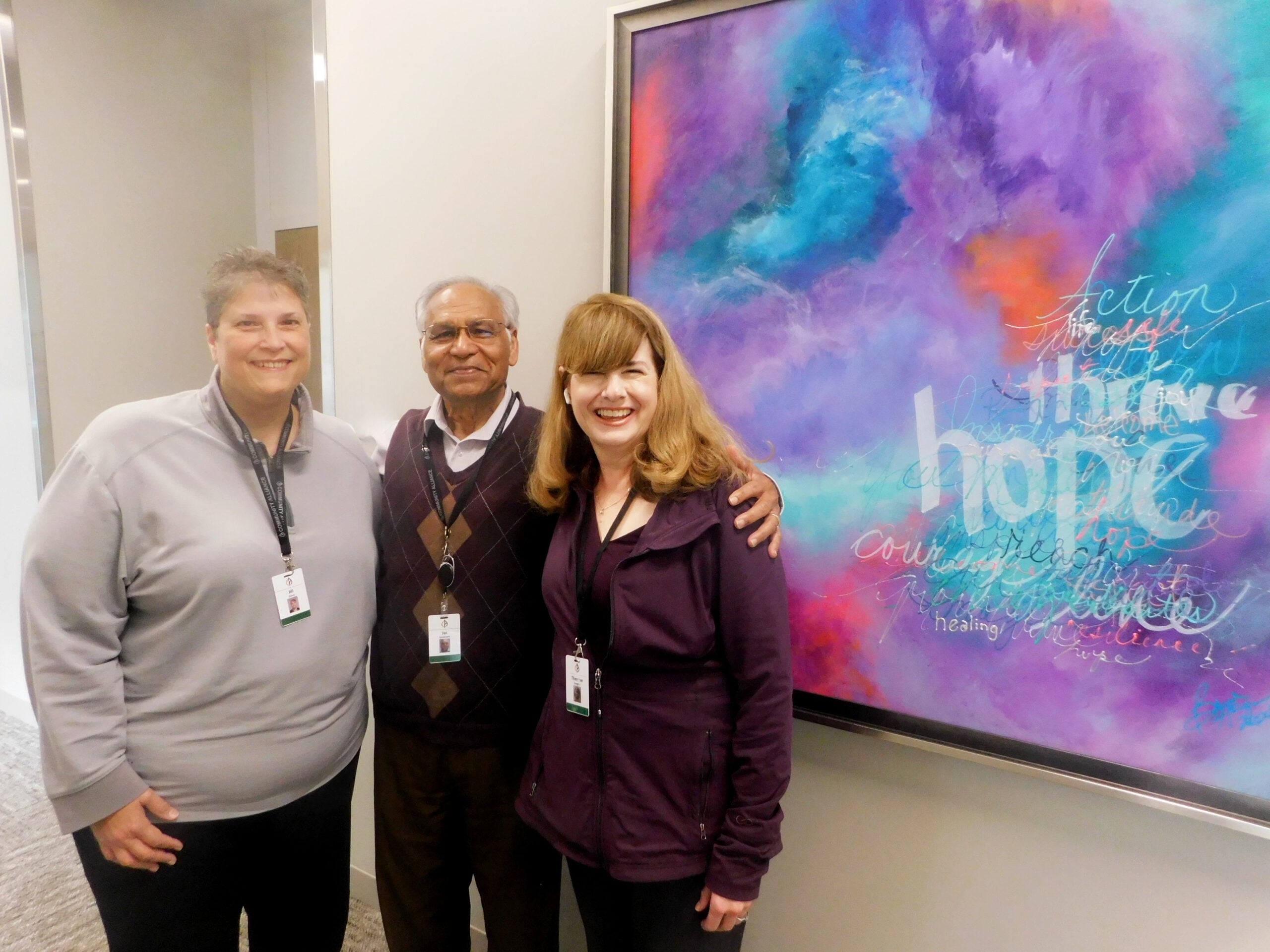
Community Alliance’s Director of Family & Education Support Services, Jai Sookram, Ph.D., has emphasized the power of family support throughout his more than 20 years managing the program.
“Family support is the strongest predictor of recovery and well-being,” Dr. Jai said. “We work hard to grow the ability of the family to remain engaged with their loved one.”
That commitment to the entire family drives the work of Jill and fellow therapist Therese Vaughn, PLMHP.
“We work with both families and their loved ones,” Therese said. “When possible, we bring everyone together in family meetings, we work with the loved ones individually, and we reconvene throughout the process to help heal relationships. It’s a beautiful process to see.”
This approach is one reason the Family-to-Family program is unique in the Omaha community. Rather than only working with the person experiencing mental illness or with their family, Community Alliance works to support both.
The community need for whole-family support is significant. So far this year, 186 individuals representing 97 families have participated in the program.
From guilt and fear to understanding and hope
Many families arrive at Community Alliance’s Family-to-Family program after years of misunderstanding, fear and stigma.
“When we tell families that this wasn’t their fault, and the science backs it up, it really does help them better understand and respond to their loved ones’ experiences,” Jill said. “It releases them from grief, shame and guilt.”
Since joining the program team a year ago, Therese has witnessed that relief many times firsthand.
“Sometimes parents just weep with relief because they’re used to hearing, ‘You’re enabling, you’re codependent,’” she said. “Dr. Jai has a different philosophy that is so unique, and it brings hope to these families.”
That hope can become a foundation for meaningful action and a renewed sense of urgency in the situation. The program involves helping participants develop practical plans for crisis response, recovery, relapse prevention, self-care and advocacy.
Transformation can start at any age
Jill and Therese have seen those lessons make a difference in families across generations and circumstances.
Therese works with a woman in her eighties whose sisters have spent much of their lives worried about her depression, as well as a 19-year-old whose family lives in another state. Jill has worked with a family whose loved one was experiencing schizophrenia, a mood disorder and substance use. Over time, the family was connected with treatment and support and began to see meaningful changes.
One family’s message has stayed with Jill: “We didn’t have hope when we found you, but we do now.”
Jill and Therese also bring personal experiences with mental illness in their own families to their work. This experience gives them a firsthand understanding of how complicated, and hopeful, the journey can be.
“I’ve missed the signals in my own family, even though I have experience working in behavioral health,” Jill said. “That’s why I do what I do. I’m hopeful my family can reconcile some of this, just like we do with families every day in this program.”
Donor support expands what’s possible
The Family-to-Family program has grown significantly over its decades serving Omaha-area families. What once operated largely with volunteers has grown into a full-time team of three with stronger connections across Community Alliance’s integrated services. Participants can move between family support, therapy, peer support and other services as their needs change.
The work is made possible through a combination of funding sources, including the generosity of Community Alliance donors. Donor contributions help us close the gap between what is funded and what families need.
“Donor support gives Community Alliance the flexibility to meet people where they are and provide the services they need across our continuum of care,” said Trish Walz, Director of Grants and Events at Community Alliance. “Our Family-to-Family program is a powerful example of that investment.”
For Jill, one of the most meaningful parts of the work is seeing what becomes possible when families have access to the right education, support and peers who understand what they’ve been through.
“These family members come to us with no trust in the system after having been traumatized elsewhere. It has been wonderful to see how we can engage with them and make a difference in people’s lives,” Jill said.
You can help Community Alliance continue providing comprehensive services to individuals and families. Make a donation today to ensure that people facing mental illness and the people who care about them have access to the resources, education and hope they need to move forward.